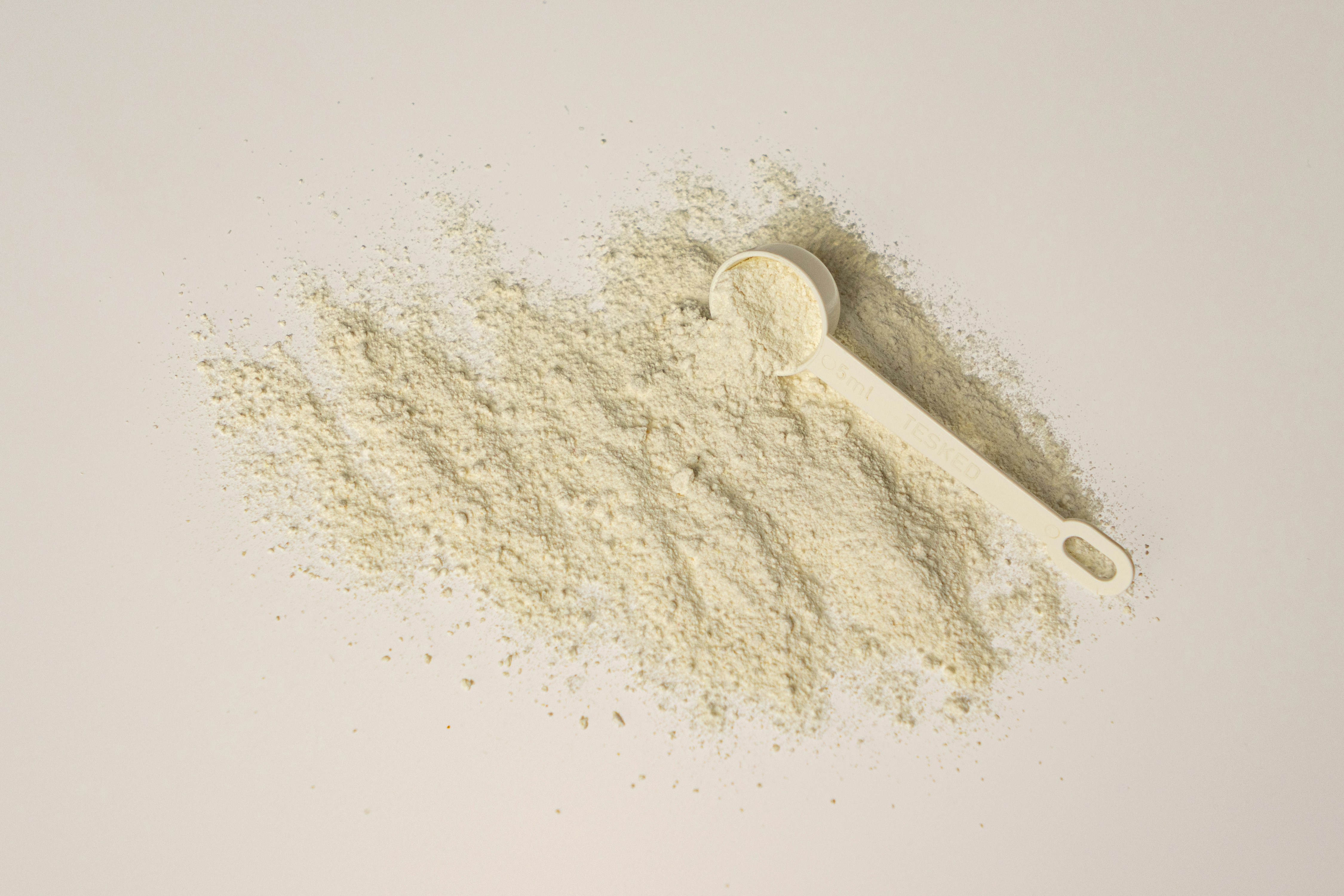
Is Whey Protein Actually Good For You? The 2026 Deep Dive
Is Whey Protein Actually Good For You? The 2026 Deep Dive
Whether you’re a seasoned "gym rat" or someone just looking to hit their daily protein goals, whey protein is likely a staple, or at least on your radar. But as its popularity has moved from hardcore bodybuilding circles to the general public, so have the questions regarding its long-term impact on our health.
In this deep dive, we sit down with the founder of Predator Nutrition, Reggie Johal, to separate the marketing hype from the biological reality. We’ll explore who actually benefits from supplementation, the truth behind common side effects, and why that post-workout shake might be a dream for one person but a digestive nightmare for another.
Is Whey Protein Good for You?
In short: Yes. For the vast majority of people, whey is an incredibly high-quality source of nutrition.
- Complete Protein: It contains all nine essential amino acids that your body cannot make on its own.
- High Bioavailability: Your body absorbs and uses whey more efficiently than almost any other protein source.
- Leucine Rich: It is packed with leucine, the specific amino acid that acts as the "on switch" for muscle protein synthesis.
How is whey protein different to other protein powders?
Reggie explains:
It's different to other types of proteins in the sense that, if you look at certain metrics like a biological value, it would tend to score better, it would digest faster.
If you were to make a study and compare different proteins, for instance, and it was done on a short time window, say just two to three hours, and you were to give them all, say, 30 grams of whey, 30 grams of chicken, 30 grams of some other protein, and then you looked at how that drove muscle protein synthesis, what you'd see with the whey protein is a rise in protein synthesis.
However, Reggie is quick to point out that "fast-digesting" doesn't always mean "better" in the long run:
Whilst that's good, if you're looking at a short window like two to three hours, realistically, it's not really going to make any difference [for longer periods].
If over the course of 24 hours, you've got three individuals, and one's just consuming whey, one's just consuming chicken, and someone else is having, I don't know, tuna, assuming all their actual protein at the end of the day is the same, assuming their calories are the same… then there'll be absolutely no difference between any three of those groups.
Any differences that you do see in things like body composition, that would be down to factors outside of the actual diet. It may be that the individual has a better training programme, for example, or he slept more, or he's got a higher testosterone level, for example. These are the things that would drive differences, so long as when you're looking at proteins, you know you're mindful that it's a total quantity over a longer period of time that matters.
Is it Vegetarian or Vegan?
- Is whey protein vegetarian? Yes. Since no animals are harmed in the collection of milk, it is a staple for many vegetarians.
- Is whey protein vegan? No. Because it is derived from cow’s milk, it is a dairy product. Vegans should opt for vegan proteins of pea, soy, or rice instead.
You mentioned a bit about whey being able to be digested faster. Is that better if you're trying to gain muscle?
If I look back, you know, when I first entered this industry, not as a retailer but as a consumer, these are one of the things that would really be attractive marketing, let's say, for someone like me.
I'd read all these statistics about how whey is richer in essential amino acids, how that's important for muscle mass, and it drives protein synthesis rapidly. There are a lot of metrics which, if you're looking at these micrometrics, I call them. It will make it look like one thing is better than the other.
You could flip all of those on its head, though. You could also say, "Okay, but over a six to eight hour window, if you've taken whey protein, someone else has taken milk, what you'll find is the person who had that initial spike from their whey protein then goes through a bit of a trough because it's kind of digested so quickly, whereas a milk protein guy uses kind of a more sustained release.
But fundamentally, none of those timing issues will matter… It doesn't matter if you compare whey protein isolate to whey protein concentrate, versus, chicken, tuna, beef, whatever it might be, so long as they're isocaloric - the calories are the same for each group, and they're also matched for protein and other macronutrients - then there literally isn't a difference…
Some may prefer whey protein because it mixes nicely with the porridge, and that helps them stay on their diet.
Reggie continues, explaining who would benefit from whey protein the most:
I would say from that perspective, if I was looking from the standpoint of someone who's looking to gain lean body mass, looking to bulk up, I guess you could say, then generally, then I would say whey protein is probably a better choice simply because it doesn't fill you up as much, and therefore, it allows you to then eat more frequently.
Whereas, if that same person was dieting—I mean, I would do this myself—...I'd probably then be thinking, "All right, appetite, it's going to be a struggle once you get to very low body fat levels. So what do I do?" Some marketers will say have whey protein isolate because it's got no fat, it's got no sugar essentially, and it's rich in protein, obviously, and but that misses the fact that it doesn't do anything to satiate you whatsoever, and you are going to be peckish, and at some point, I don't care how regimented somebody is, that kind of burning hunger you get as your body fat goes very low, that's going to eventually make some people break, and this is why… you want the food sources to be selected to try and essentially help you stick to your diet more easily, as opposed to trying to fight nature and try and willpower your way through.
Acne & Hair Loss: Addressing the Negative Effects
Many users hesitate to start whey due to fears of skin issues or hair loss.
Some whey protein users report an increase in acne. It is thought to be caused by dairy-specific growth hormones and insulin spikes that overstimulate oil production.
Searches are also common around hair loss. Hair loss remains primarily a genetic issue; however, because whey is linked to higher testosterone, which can elevate DHT (dihydrotestosterone), it may accelerate the timeline for those already prone to pattern baldness:
We asked Reggie to clear the air.
Does whey protein cause acne?
Reggie explains:
When you look at dairy proteins, because I take this question not really as a whey-specific question, I take it as a dairy-specific question. When you talk about whey and acne, you know, there's not really much in the way of research specific to that. But there would be, I think, more so with dairy and acne.
But even with dairy and acne, the actual research would paint a very mixed picture, and fundamentally, what you'll see is people who have an issue tolerating dairy are more likely to be the ones who have an issue with, with whey, but they'd have an issue with milk, they'd have an issue with cheese.
Whatever amount of data there is about whey acne, there's probably an awful lot more just around people finding out that dairy products in general seem to cause flare-ups or they can cause other issues.
For those with an intolerance to dairy products, generally, there is the potential for acne, but it's not something that should concern most people. If someone does have intolerance issues with dairy, then they are best off not using dairy produce or at least offsetting some of the issues with lactase.
Does whey contribute to hair thinning, or is this a misunderstanding of how it interacts with DHT and training?
Whey protein [is] no different to chicken or no different to pasta; it is not going to have any interaction with DHT levels, nor training…
If you were to really look at isolating differences between the whey group and the non-whey group, what you'd probably find is that the whey group is more likely to be exercising first of all… So then that training, in its turn, you know, is likely to have a more favourable hormonal profile for that person. For a man, it would probably be linked to higher testosterone, which in turn would be linked to the higher DHT, which in turn would then contribute to some extent to hair loss. Even then, it has to be very much something you're genetically prone to having.
Digestion, Bloating, and Quality
Because whey comes from milk, it contains lactose. If you are lactose intolerant, standard whey concentrate will likely cause gas, bloating, and stomach cramps.
Is bloating a "whey" problem or a "cheap filler" problem?
I can't really think of something specific that would be like a minor ingredient that would have that impact when it comes to whey protein powder or any protein powder. I mean, you could see it more with protein bars, certainly.
So to the extent [people] are having issues with bloating, are they having an immune response, like some tolerance issues? If that's the case, then it's not so much about it being cheap filler or even a whey problem.
The first thing you would do is switch to a whey isolate
The first thing you would do is switch to a whey isolate if you wanted the whey, and [the problems] generally go away for most people. If you've still got issues, then and it's, let's just say it's a lactose-free whey isolate, which a lot of them are, then at that point, if you're feeling some type of way which you don't feel without that, it's much more likely to be a dairy-specific issue.
And then things like lactase, which would help if you had lactose, well, that wouldn't be a factor, even if there's no sugar in the product in the first place.
So at that point, if you're still getting bloating issues, it's not going to be from any additional filling ingredient. It's going to be from the core thing you're taking, which is the fact that you have an indigestion issue.
If intolerant to dairy, they're not going to be able to handle milk, cheese…for that person, they're going to have to fundamentally make some lifestyle adaptations.
Are there alternatives for those with intolerances?
It's all good and well saying you could just have tuna, but I mean, maybe you don't want to mix tuna with your porridge in the morning, you know, I've done that myself. I didn't mind it, but I can imagine not everyone's like me.
For those people who want to take it, for convenience reasons, taste reasons… can't get enough calories, and they leave the meals half eaten. So for those individuals who, they just haven't got a big appetite, then I guess if you were looking at still wanting to use whey protein, then I would say to that person, you're better off, generally speaking, going for a whey isolate because it's more processed essentially or whey hydrolysate.
Alternatively, you could stick to a regular whey protein, which is largely whey protein concentrate. And then... you can buy the lactase enzyme, and lactase is the enzyme which essentially digests lactose, which is the sugar which causes a lot of issues with whey. So, I mean, that is an obvious option. I think to the extent their issues are linked to not digesting lactose properly, and that won't be for all people, and there'll be other issues potentially they may have, but that could potentially fix their issues if they wanted to use whey.
Does the source of milk (grass-fed, organic) affect the nutritional quality or health benefits of the resulting protein?
These topics around grass-fed is a massive thing in the USA because in the USA, the vast majority of cows, whether they're raised for beef or raised for milk, and they essentially just leave them in sheds where they're fed grain, trapped in a small space, which would lead to an adverse impact on the cow's health. It's not good from an animal rights perspective by any means. And that will also translate into a slightly different type of milk and beef, as things like… omega-3 fats, um, conjugated linoleic acid, CLA, it's sold as a supplement, um, their proportions would differ compared to what you would get if it was grass-fed.
Now, the reason I just mentioned about America is because you're not going to get this in the UK. You need to drive from one city to another in the UK and you're going to see plenty of cows roam in the field. In the UK, you know, your milk or your beef will be grass-fed by default…There will be some supplemental feeding of grains, I mean, in winter, for example, but it represents a tiny proportion of what the animal eats.
Now, where it matters for this type of question is, because I did say there will be some differences in the quality of beef and milk from the American grain-raised cow versus the European grass-fed. Um, but once you process milk, you're kind of removing those differences anyway, because then a lot of those differences that I mentioned are fats, but that gets processed out when you make a whey protein.
So, what you'll end up with is, whether it's grass-fed or not, the actual protein content per 100 grams, let's say, is going to be largely the same, unless they decide that they want to add in some of the fats that the American cow doesn't produce in Europe.
For the most part, just speaking purely in terms of the protein content, there'll be no difference.
Does Advice Around Whey Protein Change Depending on the Individual?
When taking whey protein, how does advice change for a 16-year-old versus a 50-year-old? Do older adults need more to overcome anabolic resistance?
It is far more dependent on their bodyweight, lean body mass, and exercise habits, but to the extent anabolic resistance is a factor in older individuals, a higher dose has been shown to help.
In general, the older person would need more protein… But I think if you're looking at those two individuals, a 16-year-old and the older guy, it depends who this 16-year-old is and who the 50-year-old guy [is]. So the 50-year-old guy has been competing as a bodybuilder for 30 years and weighs 100 kilograms and is 10% body fat, then, and he trains all the time, then he's going to need more so for those factors. And the 16-year-old… if he doesn't train, he won't need much in the way of protein.
Certainly, it's going to depend more on the body weight, the lean body mass, their exercise habits more so than just age specifically.
Is whey protein safe during pregnancy or for new mothers?
Yes, it would be. While there are certain ingredients pregnant women are told to avoid such as caffeine or alcohol, even chocolate potentially due to the theobromine content, whey is not contraindicated.
Should People Be Concerned About Heavy Metals Found in Protein Powders?
I think it probably is something that the industry in general probably start third party test for, and we are rolling out third-party testing for our products. The only thing that I think people should know about this is, I mean, there's nothing specific in relation to protein powders and heavy metals. Heavy metals are found in the environment; they're found in the soil, they're found in the water. So when you're having your wheat-based food, your rice-based food, your meat, your fish, whatever it might be, they're all going to have the same heavy metals in it.
Think about how protein powders are made. You know, there's a farmer, you know, with his milk or his cheese, and it's getting turned into one thing or another. At no point is any manufacturer adding in heavy metals.
The final verdict. Is whey protein good for you?
Reggie’s advice boils down to your specific goal:
- For Bulking: "> I would say whey protein is probably a better choice simply because it doesn't fill you up as much, and therefore, it allows you to then eat more frequently."
- For Dieting: Be careful. "> it doesn't do anything to satiate you whatsoever, and you are going to be peckish... you want the food sources to be selected to try and essentially help you stick to your diet more easily."
Ready to upgrade your supplement stack with formulas that actually deliver? Explore our full range of premium whey protein powders and performance essentials at Predator Nutrition today.
Recommended products