Why Most Ashwagandha Supplements Don't Work (And What the Science Says About Absorption)
Why Most Ashwagandha Supplements Don't Work (And What the Science Says About Absorption)
Jump to:
- TL;DR:
- What is ashwagandha, and why does it have such a mixed reputation?
- The benefits of Ashwaghanda that evidence actually supports
- 1. Stress and cortisol
- 2. Sleep quality
- 3. Athletic performance and recovery
- The honest caveat
- The key actives: withanolides explained
- Why withanolide percentage alone misleads you
- The plant part problem
- The dose calculation problem
- The absorption problem
- Product Callout: Ashwagandha Elite
- How branded extracts like KSM-66 compare (and where their ceiling is)
- The Absorption Problem: Why Most Supplements "Don't Work"
- The Cyclodextrin Solution (HPβCD)
- Why a 'true inclusion complex' is different from 'blending'
- Piperine: the complementary mechanism
- How to choose a genuinely high-quality ashwagandha supplement
- Ashwaghanda dosage guidance
- Side effects, safety, and who should avoid it
- FAQs
- Why did ashwagandha do nothing for me before?
- What is a good withanolide percentage?
- What is the difference between KSM-66 and a whole-plant extract with HPβCD?
- What is a true inclusion complex and why does it matter?
- What does piperine add?
- How long does ashwagandha take to work?
- When is the best time to take it?
- References
TL;DR:
- What is it? A powerful "adaptogen" herb that may help your body maintain balance and manage physical and mental stress.
- Key Benefits: May lower cortisol (stress), improve sleep quality, boost VO2 max (your body’s ability to use oxygen during exercise), and support cognitive focus.
- How to Take It: Standardised extracts are the most effective. Most clinical studies suggest 300mg-600mg per day.
- Why Quality Varies: Many products are underdosed or use cheap leaf-only blends that aren't as effective as high-quality root extracts.
- The Absorption Hack: Withanolides are fat-soluble and hard to absorb. Look for engineered formulas that use Cyclodextrins (HPβCD)—this makes the actives water-soluble so your body can use them.
- Safety First: It is generally safe, but if you have a condition or take medication, consult your doctor first, as ashwagandha may affect hormone levels.
Ashwagandha is the "King of Herbs" in Ayurvedic medicine, used for thousands of years to help the body counteract the mental and physical toll of stress. Today, it’s a go-to for high performers looking to stay balanced in an "always-on" world.
But not all ashwagandha is the same. The market is flooded with everything from raw powders to high-tech extracts, and the quality varies wildly. If you’ve tried it before and felt nothing, or want to maximise its impact on your recovery and focus, this guide is for you. We’re breaking down the science of its active compounds, the truth about dosages, and why new delivery technology is a total game-changer for absorption.
What is ashwagandha, and why does it have such a mixed reputation?
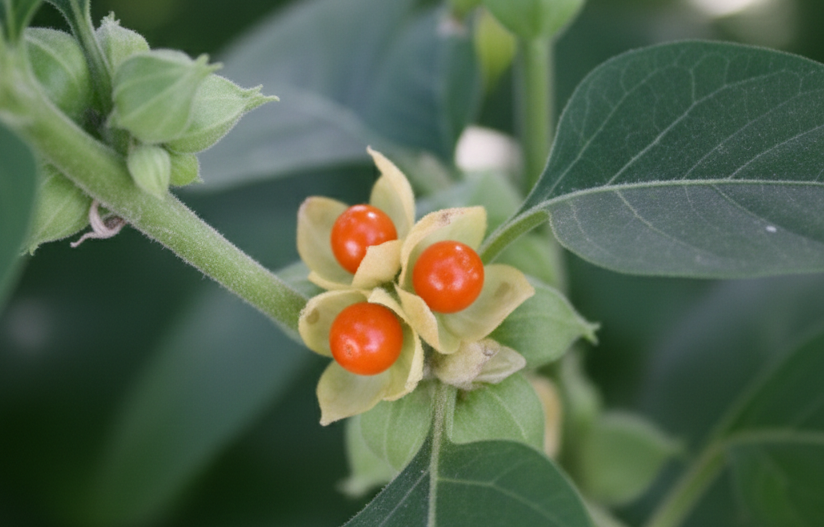
Ashwagandha (Withania somnifera) is an evergreen shrub native to India, the Middle East, and parts of Africa. It has been used for centuries in Ayurvedic medicine as a rasayana, a class of herbs associated with vitality, resilience, and recovery. Its Latin name, somnifera, means sleep-inducing, which gives you an early indication of its dual-use reputation.
In modern supplements, it is classed as an adaptogen: a compound thought to help the body restore balance by modulating your response to stress depending on your current state. That context-dependence matters more than most product descriptions acknowledge. Someone who is chronically overworked, under-recovered, or running at a high stress baseline will typically notice a much more obvious effect than someone already sleeping well and managing stress comfortably. For the latter group, ashwagandha may always be subtle regardless of the product quality, because there is simply less imbalance for it to correct.
The mixed reputation comes from two distinct places, then. One is a genuine non-response in people who do not have much to improve. The other, and by far the more common cause of disappointment, is product quality:
- Weak standardisation
- Poor withanolide content
- Extracts that are not being absorbed consistently.
These are fixable problems. The baseline state issue is not, and it is worth being honest about that upfront.
The benefits of Ashwaghanda that evidence actually supports
Ashwagandha has a meaningful body of human trial data, but the quality varies, and the results are extract-specific. Here is an honest read of the strongest areas.
1. Stress and cortisol
Chandrasekhar et al. (2012) conducted a double-blind, randomised, placebo-controlled trial in 64 adults with chronic stress. Participants taking a high-concentration full-spectrum root extract at 300 mg twice daily for 8 weeks showed significant reductions in perceived stress scores and serum cortisol compared to placebo. This is the most cited ashwagandha RCT, and the evidence here is solid.
The practical implication is important: outcomes are strongest in people genuinely running at a high stress baseline. Low-stress individuals often notice very little.
2. Sleep quality
Langade et al. (2019) conducted a double-blind, randomised, placebo-controlled study in 60 adults with insomnia and anxiety. The ashwagandha root extract group showed significant improvements in sleep onset latency, total sleep time, sleep efficiency, and anxiety scores over 10 weeks versus placebo.
It is also worth noting that research by Kaushik et al. (2017), published in PLOS ONE, identified triethylene glycol (TEG), a compound found in the water and leaf extracts of ashwagandha, as a sleep-active component distinct from withanolides. This is relevant context for whole-plant extracts: the sleep-supporting properties of ashwagandha may involve more than the withanolide fraction alone.
3. Athletic performance and recovery
Wankhede et al. (2015) conducted a double-blind, randomised, placebo-controlled trial in 50 healthy athletic adults. The ashwagandha group taking 300 mg twice daily for 12 weeks showed significantly greater improvements in VO2 max and muscle recovery markers compared to placebo. This is the strongest evidence base for ashwagandha in a training context.
Wang et al. (2021), published in PLOS ONE, further investigated the effects of ashwagandha withanolides on muscle cell differentiation, finding that withanone-rich extracts in particular promoted myoblast differentiation to myotubes and supported stress-tolerance mechanisms relevant to muscle repair.
The honest caveat
Many ashwagandha trials have relatively small sample sizes and short durations. The directional evidence is encouraging and reasonably consistent, but large long-term RCTs are still limited. The benefits are real. They are not guaranteed or universal.
The key actives: withanolides explained
Ashwagandha primarily works through natural compounds called withanolides, which give the herb its potency. These are the compounds most of the adaptogenic, stress-modulating, and recovery-related research is attributed to.
Raw ashwagandha root powder can contain below 1% withanolides. Standardised extracts concentrate these actives to a defined, verified level, which is why extract-based products produce more consistent results than root powder alone.
Withanolides are not a single compound but a broad family. The relative proportion of individual withanolides, particularly the ratio of withanone to withaferin A, influences both the character of the extract and its specific effects. A product with a high withaferin A content behaves differently from one dominated by withanone, even at the same headline percentage.
Why withanolide percentage alone misleads you
Withanolide percentage is the first thing most people look at when comparing products. It matters, but used in isolation, it can actively mislead you.
The plant part problem
Ashwagandha leaves contain naturally higher concentrations of certain withanolides than the root, particularly withaferin A. A manufacturer can use a leaf-heavy or whole-plant blend and achieve a high withanolide percentage relatively cheaply. The resulting profile is not necessarily inferior, but it is different, and the bulk of human clinical evidence was conducted on root-dominant extracts. A standardised percentage with no plant part declaration tells you very little about what you are actually getting.
The dose calculation problem
Most product comparisons compare milligrams of extract as if all extracts are equivalent. They are not.
- A 600 mg product at 1% withanolides delivers 6 mg of active compounds.
- A 250 mg product at 11% delivers roughly 27 mg.
The second product contains less extract by weight but over four times the active content. Milligrams without a potency context are essentially meaningless.
The absorption problem
This is the piece almost no product comparison addresses, and it is arguably the most important one.
Even when the withanolide content is high and accurately declared, what you swallow is not necessarily what your body uses. Withanolides are lipophilic compounds: they are fat-soluble, which means they disperse poorly in the predominantly aqueous environment of the gut:
- Inconsistent dispersion produces inconsistent absorption.
- Inconsistent absorption produces inconsistent results.
This is why two people taking the same product at the same dose can have completely different experiences.
Product Callout: Ashwagandha Elite
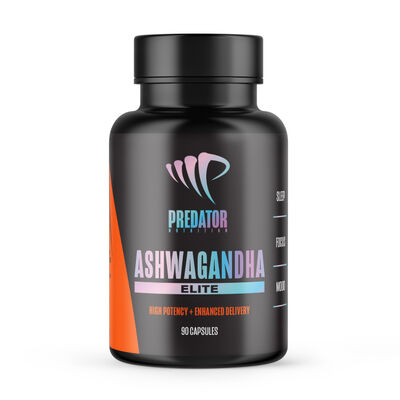
Ashwagandha Elite is the only ashwagandha supplement combining all three elements in a single formula: a whole-plant extract standardised to 11.41% withanolides as measured by HPLC on the raw extract prior to complexation, formed into a true 1:1 HPβCD inclusion complex, with 5 mg of 95% piperine to support absorption through a complementary pathway.
Each capsule provides 500 mg of the inclusion complex (250 mg ashwagandha whole-plant extract delivering over 10% withanolides, 250 mg HPβCD) alongside 5 mg piperine. For comparison, KSM-66, the leading branded root extract, is standardised to approximately 5% withanolides with no delivery technology. Ashwagandha Elite delivers more than double the withanolide content per gram of extract, in a form specifically engineered to reach the bloodstream consistently.
How branded extracts like KSM-66 compare (and where their ceiling is)
- KSM-66 is the most research-backed branded ashwagandha extract available and deserves its reputation as a quality benchmark. It uses 100% root extract, standardised to approximately 5% withanolides via a water and milk-based extraction process, and has more clinical trials behind it than any other branded ashwagandha product.
- Sensoril uses both root and leaf, standardised to approximately 10% withanolides and withanosides combined, and is generally positioned for relaxation and sleep support.
Both represent a genuine step up from unbranded commodity powder. If you are buying a mainstream ashwagandha supplement, either is a reasonable choice.
But they share the same fundamental limitation: they are standardised extracts delivered in conventional capsule form with no meaningful solution to the lipophilicity problem. KSM-66 at 5% withanolides means a standard 300 mg capsule delivers approximately 15 mg of withanolides into a gut environment that may not absorb them efficiently or consistently. The extract quality is good. The delivery format sets a ceiling on what that quality can actually achieve.
The Absorption Problem: Why Most Supplements "Don't Work"
Even the best extract is useless if your body can't absorb it. Withanolides are lipophilic (fat-soluble), meaning they don’t dissolve well in the watery environment of your gut. This leads to inconsistent absorption and results that vary from day to day.
The Cyclodextrin Solution (HPβCD)
To overcome this, next-generation supplements use Hydroxypropyl-beta-cyclodextrin (HPβCD).
-
How it works: Imagine a hollow cone. The interior is fat-loving (hydrophobic), and the exterior is water-loving (hydrophilic).
-
Inclusion Complex: The withanolide molecule is physically "trapped" inside the cone. This creates a water-compatible exterior, allowing the active to travel through your digestive system and into your bloodstream with far greater efficiency.
Note: A true "inclusion complex" is molecularly bonded. Simply blending HPβCD powder with Ashwagandha in a capsule does not provide the same absorption benefits.
For ashwagandha, this directly addresses the rate-limiting step in bioavailability. Kaul et al. (2016) demonstrated that cyclodextrin-assisted extraction enriches key ashwagandha actives and improves the extractable profile of the compounds. A 2025 review by Wiciński et al. in Nutrients specifically examined HPβCD as a carrier in advanced ashwagandha formulations designed to improve solubility, distribution, and overall bioavailability of the extract.
Why a 'true inclusion complex' is different from 'blending'
This distinction is worth understanding because it is where most "enhanced delivery" claims in the supplement industry fall apart.
Simply combining an ashwagandha extract with HPβCD powder and encapsulating both together is not the same as a true inclusion complex.
- In a true 1:1 inclusion complex, the active molecules are physically hosted within the cyclodextrin cavity at a molecular level. The result is a structurally integrated compound with demonstrably different solubility and dispersion properties to either ingredient alone.
- Blending achieves none of this. The two ingredients remain physically separate, and the solubility and absorption profile of the withanolides is largely unchanged.
A true HPβCD inclusion complex is more technically demanding to produce and more expensive. It is also the only version that genuinely delivers on the absorption rationale.
Piperine: the complementary mechanism
Many premium formulas also include Piperine (Black Pepper Extract). While Cyclodextrins help with initial solubility, Piperine inhibits the enzymes (like CYP3A4) that try to break down the actives before they can reach systemic circulation and reduces P-glycoprotein-mediated efflux. By inhibiting both, piperine extends the bioavailable window of absorbed actives and increases the fraction that reaches the bloodstream.
The two mechanisms are complementary rather than redundant.
- HPβCD addresses the dissolution and dispersion problem at the gut lumen stage.
- Piperine addresses the metabolic clearance problem at the intestinal wall and liver stage. Together, they target the two primary points of attrition in oral bioavailability.
How to choose a genuinely high-quality ashwagandha supplement
- Plant part declared. Root-only products have the largest body of clinical trial backing. Whole-plant extracts can deliver a broader active profile, but the plant part should be explicitly stated. Vague labelling at this point is a red flag.
- Actual withanolide yield per dose. Calculate: dose in mg multiplied by withanolide percentage equals milligrams of active delivered. Then assess whether the delivery system improves on that theoretical yield.
- Delivery technology is explained clearly. Is there a credible rationale for how the product addresses lipophilicity? Is the mechanism explained with specificity rather than vague "enhanced bioavailability" language? A true inclusion complex is meaningfully different from a blended product, and a brand confident in its formulation will tell you which one it is.
- Piperine or complementary absorption support. Even modest doses of piperine at the right standardisation (95% piperine from black pepper extract) provide a meaningful downstream complement to cyclodextrin delivery.
- Transparency on sourcing and testing. Brands that rely on proprietary blends without percentage disclosure are not operating at the standard the category now demands.
Ashwaghanda dosage guidance
Standard clinical trial doses for conventional root extracts standardised to approximately 5% withanolides range from 300 mg to 600 mg per day, typically split across two doses.
With a higher-potency extract combined with an inclusion complex delivery system, this guidance becomes less directly applicable. You are delivering a greater active yield per unit of extract and improving the efficiency with which those actives reach the bloodstream.
General practical guidance:
- Start at the lower recommended dose and assess your response over three to five days before adjusting.
- High-potency formulations can be notably effective at lower doses than expected, particularly in individuals with a high stress baseline.
- Take with food if you are prone to GI sensitivity.
- For sleep and recovery, evening use suits most people.
- For daytime stress management, a morning dose or split dosing tends to work better.
- For training recovery, evening use supports the overnight downshift and repair process.
Most clinically measured outcomes, particularly for cortisol reduction and sleep quality, appear meaningfully after four to eight weeks of consistent use. Do not assess the product on week one alone.
Side effects, safety, and who should avoid it
Ashwagandha is well-tolerated in clinical studies at standard doses, but there are considerations worth knowing.
Avoid or consult a clinician first if:
- you are pregnant or breastfeeding
- have thyroid disorders or take thyroid medication (ashwagandha may increase thyroid hormone levels)
- have autoimmune conditions such as lupus, multiple sclerosis, or type 1 diabetes
- are taking sedatives, benzodiazepines, or other CNS-active medication
- are taking blood sugar medication
- are scheduled for surgery within two weeks due to potential interaction with anaesthesia
Common side effects include:
- Gastrointestinal discomfort, particularly on an empty stomach
- Excessive drowsiness or a flattened feeling, more likely with high-potency extracts taken in the daytime.
- Some long-term users report mild emotional blunting. For this reason, many practitioners suggest cycling the herb: eight weeks on followed by a two-week break, or not exceeding three months of continuous use without a pause.
FAQs
Why did ashwagandha do nothing for me before?
The most common reasons are a weak or poorly standardised extract, a conventional capsule formulation with no attention to absorption, a dose too low relative to the extract's potency, or a baseline where stress and sleep were already well managed. The last category will always find ashwagandha subtle regardless of the product.
What is a good withanolide percentage?
Most mainstream branded extracts sit between 2.5% and 5%. Above 10% represents a meaningfully higher potency tier. The important qualifier is that higher percentage is only genuinely advantageous if the delivery system supports efficient absorption. Without that, a percentage increase on the label does not translate proportionally into effect.
What is the difference between KSM-66 and a whole-plant extract with HPβCD?
KSM-66 is a root-only extract standardised to approximately 5% withanolides, delivered in a conventional capsule. A whole-plant extract at over 10% withanolides in a true HPβCD inclusion complex with piperine addresses both the potency gap and the absorption gap that conventional extracts, including KSM-66, leave unresolved.
What is a true inclusion complex and why does it matter?
A true inclusion complex physically encases withanolides within the HPβCD cavity at a molecular level, converting them into a water-dispersible form that behaves consistently in the gut environment. Simply blending an extract with HPβCD powder does not achieve this and does not meaningfully change the absorption profile of the withanolides.
What does piperine add?
Piperine inhibits the metabolic enzymes and efflux pumps that break down absorbed compounds before they reach systemic circulation. It extends the bioavailable window of the withanolides through a mechanism complementary to the cyclodextrin complexation, targeting post-absorption clearance rather than pre-absorption solubility.
How long does ashwagandha take to work?
Some people notice a calming effect within a few days, particularly at a high stress baseline. Most clinically measured outcomes, particularly cortisol reduction and sleep improvement, are observed after four to eight weeks of consistent daily use.
When is the best time to take it?
For sleep support, evening use is most commonly recommended. For daytime stress, a morning or split dose suits most users. For training recovery, evening use supports the overnight repair process.
References
- Chandrasekhar, K., Kapoor, J. & Anishetty, S. (2012). A prospective, randomised double-blind, placebo-controlled study of safety and efficacy of a high-concentration full-spectrum extract of ashwagandha root in reducing stress and anxiety in adults. Indian Journal of Psychological Medicine.
- Langade, D., Kanchi, S., Salve, J., Debnath, K. & Bhattacharyya, D. (2019). Efficacy and safety of ashwagandha root extract in insomnia and anxiety. Cureus.
- Wankhede, S., Langade, D., Joshi, K., Sinha, S.R. & Bhattacharyya, S. (2015). Examining the effect of Withania somnifera supplementation on muscle strength and recovery. Journal of the International Society of Sports Nutrition.
- Kaushik, M.K., Kaul, S.C., Wadhwa, R., Yanagisawa, M. & Urade, Y. (2017). Triethylene glycol, an active component of Ashwagandha leaves, is responsible for sleep induction. PLOS ONE.
- Wang, J., Zhang, H., Kaul, A., Li, K., Priyandoko, D., Kaul, S.C. & Wadhwa, R. (2021). Effect of Ashwagandha withanolides on muscle cell differentiation. PLOS ONE.
- Kaul, S.C., Ishida, Y., Tamura, K., Wada, T., Iitsuka, T., Garg, S., Kim, M., Gao, R., Nakai, S., Okamoto, Y., Terao, K. & Wadhwa, R. (2016). Novel methods to generate active ingredients-enriched ashwagandha leaves and extracts.
- Wiciński, M., Fajkiel-Madajczyk, A., Sławatycki, J., Szambelan, M., Szyperski, P., Wojciechowski, P., Wójcicki, J. & Gawryjołek, M. (2025). Ashwagandha (Withania somnifera) and its effects on well-being: a review. Nutrients.
Recommended products